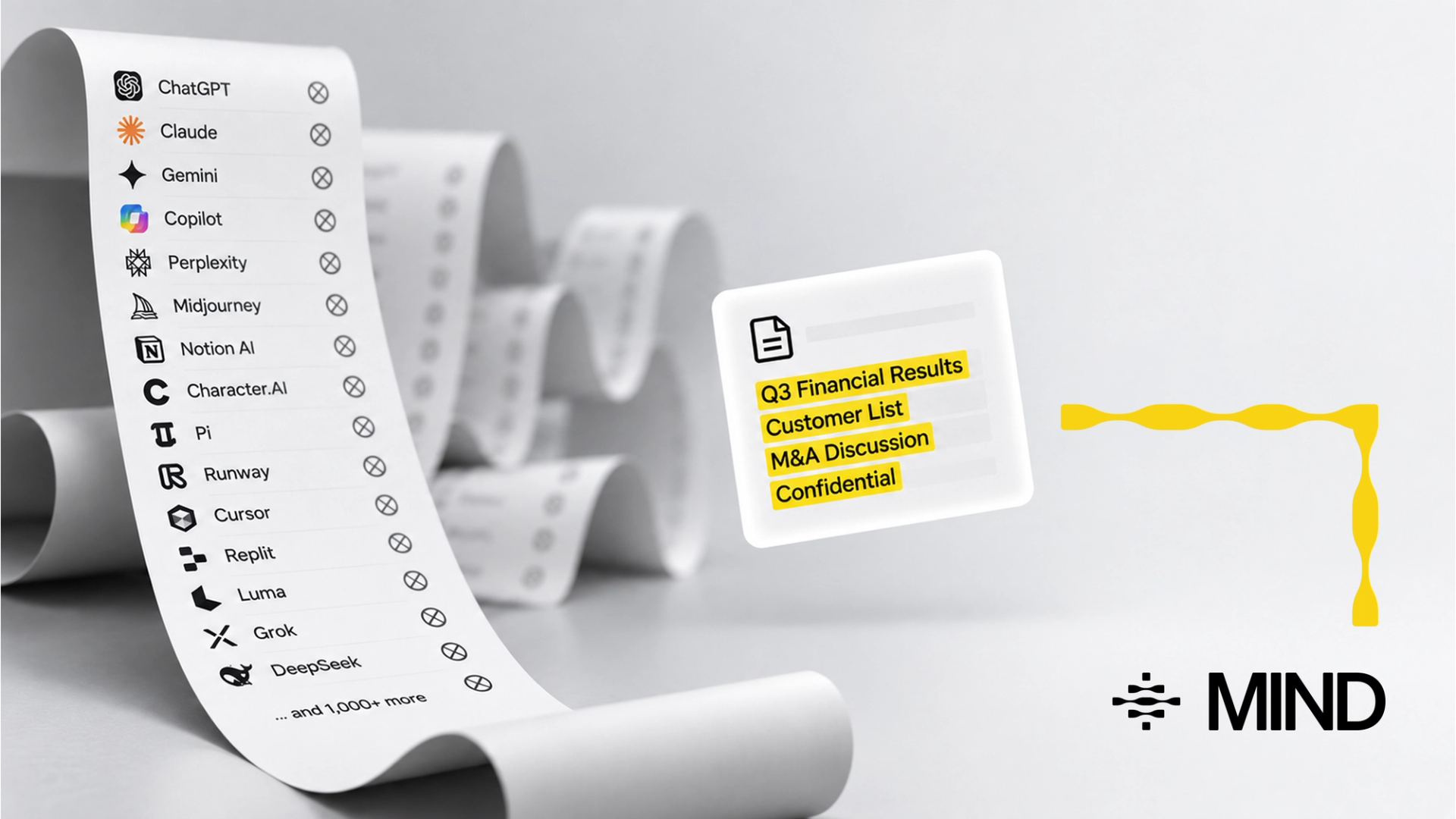











The scale of modern data environments has outpaced the manual workflows that DLP programs still depend on. Something has to change.
The scale of modern data environments has outpaced the manual workflows that DLP programs still depend on. Something has to change.
Running a Data Loss Prevention program has never been easy. Security teams define policies, tune classifiers, investigate alerts and stitch together signals across dozens of systems. The mission is clear: protect sensitive data. The reality is a constant stream of operational work that pulls analysts away from higher-value security decisions.
What matters now is simple. Data security teams need a way to operate at the speed of their environments.
Sensitive data now moves across SaaS platforms, GenAI applications, endpoints, on-premise file shares and emails. At the same time, security teams are expected to protect it all without growing headcount. The gap between the scale of modern data environments and the capacity of security teams continues to widen.
Running a DLP program is not optional. The challenge is how much manual effort it still demands.
Why is traditional DLP so hard to operate today?
Traditional DLP was built for a different era. Early systems relied heavily on pattern matching, static policies and manual review. As environments grew more complex, security teams responded by adding more rules, more policies and more investigation workflows.
Over time this created an operational burden. Alerts increased. False positives accumulated. Analysts spent more time triaging activity than understanding risk.
Modern environments simply move faster than manual workflows can keep up with.
What does autonomous data security actually mean?
This is where the idea of autonomous data security comes in.
Instead of asking security teams to run every workflow manually, the system can begin taking on parts of that operational work. Classification, investigation and triage become collaborative processes between analysts and intelligent systems. The analyst stays in control, but the heavy lifting starts to shift toward automation.
Our vision is to revolutionize data security by innovating with simplicity, AI and automation in MIND.
We believe that programs should scale with the business. Security teams should spend less time managing alerts and more time focusing on real risk.
What is the Autonomous DLP Analyst?
Today we are taking a meaningful step toward that vision.
MIND is introducing the Autonomous DLP Analyst, designed to help security teams run their data security programs at AI speed. Rather than requiring analysts to manually execute every step of the workflow, the Autonomous DLP Analyst performs key operational tasks through specialized skills.
People remain at the center of the process. What changes is how much repetitive work they have to do to get to an answer.
The first two skills focus on areas where security teams consistently spend the most time: building classifiers and investigating issues.
How can security teams automatically classify business-specific data?
Every organization has sensitive data that is unique to its business. Intellectual property, internal strategy documents, proprietary code and operational records rarely follow predictable patterns.
Historically, security teams attempted to identify this data using complex regex rules and static policy logic. Maintaining those rules required constant tuning and often generated large volumes of false positives.
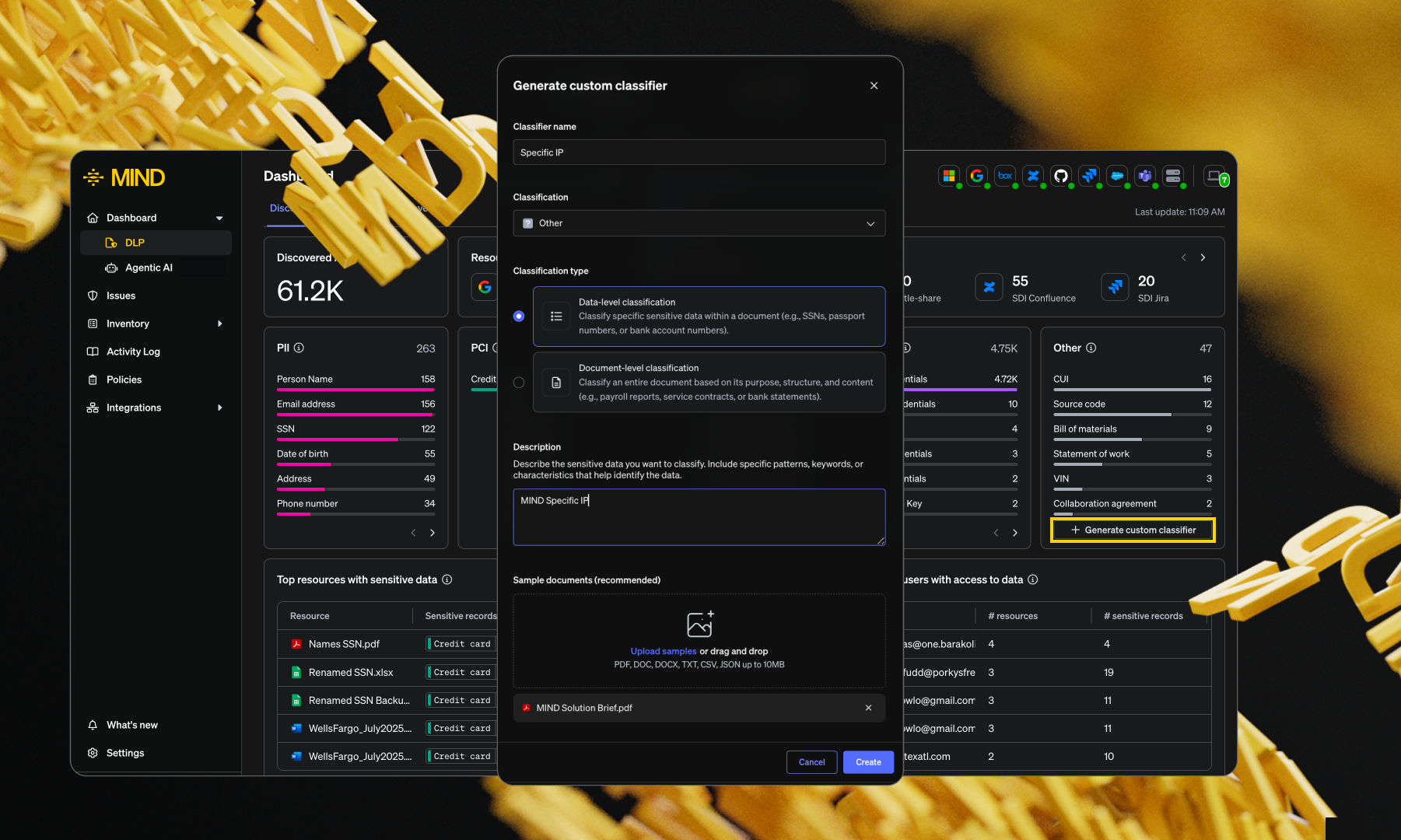
The Custom Classifier skill changes this workflow.
Security teams can provide examples of the sensitive data that matters to their organization. The system analyzes those examples and automatically generates classifiers designed to recognize similar information across the environment.
These classifiers are then deployed into MIND's multi-layer AI classification engine, allowing the platform to detect business-specific data across SaaS applications, GenAI tools, endpoints, on-premise file shares and email environments.
Instead of forcing teams to translate business knowledge into complex rules, the system learns directly from the data itself.
How can AI help investigate DLP alerts faster?
The second operational bottleneck in most DLP programs is investigation.
When alerts appear, analysts often need to reconstruct the entire sequence of events. Who accessed the data. Where it moved. How sensitive the information is. Whether the activity represents real risk or normal behavior.
Gathering that context typically requires pivoting between multiple tools and consoles.
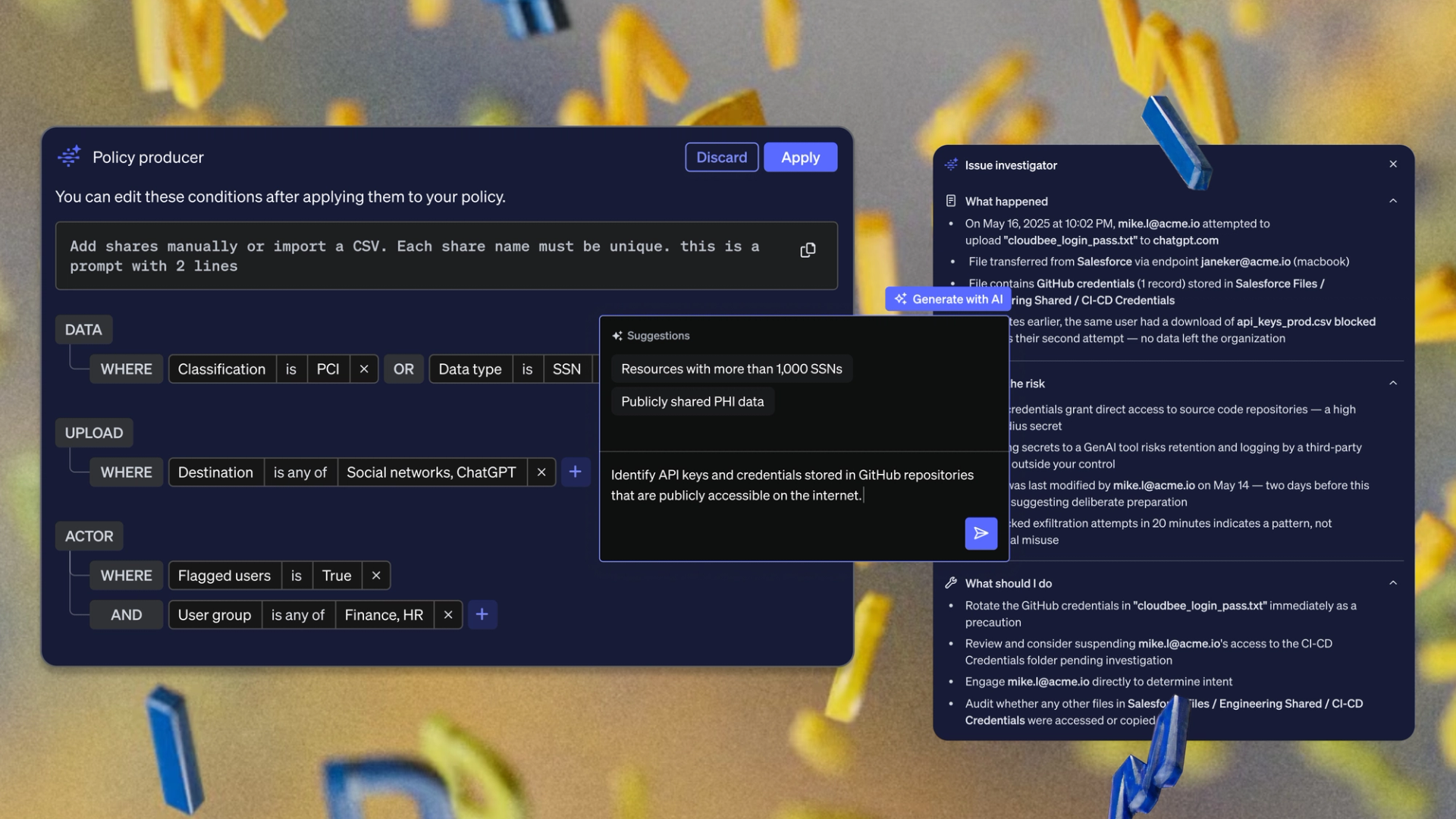
The Issue Investigator skill streamlines this process.
Rather than assembling the story manually, analysts receive structured context that highlights the most relevant signals. User activity, file movement and data sensitivity are presented together so the investigation can begin with the right perspective.
Automation helps here, but the real value is clarity. When context arrives with the alert, security teams can understand what happened much faster and respond with greater confidence.
What does the future of autonomous data security look like?
These first skills represent the beginning of a broader shift in how data security programs operate.
Modern environments generate enormous volumes of operational work. Classification tuning, alert analysis, investigation and policy refinement can consume a security team's time before they ever reach strategic risk decisions.
Autonomous data security aims to change that equation.
The Autonomous DLP Analyst will continue to evolve with additional skills designed to handle more of the workflows that slow security teams down today. Each skill moves another operational task from manual effort to intelligent assistance.
The goal is to reduce operational friction so security teams can focus on protecting what matters most.
Why will autonomous data security define the next generation of DLP?
The future of data security will not be defined by more alerts or more rules.
It will be defined by systems that understand context, reduce manual effort and help security teams move faster than the threats they face.
The Autonomous DLP Analyst is an important step toward that future. And we are only getting started.
More skills are already on the way, each designed to make data security programs easier to operate and easier to scale.
Learn more about it at https://www.mind.io/solutions/autonomous-dlp-analyst