








Uber is giving ChatGPT to its whole workforce on enterprise terms.
Uber is giving ChatGPT to its whole workforce on enterprise terms.
Uber is rolling ChatGPT Work out to all 30,000 employees, according to TechCrunch. That deserves applause. MIND's 2026 research, produced with CISO ExecNet, found that the first item on CISOs' minimum list is an enterprise license, not a consumer account, to ensure administrative visibility and activity auditability. Uber has cleared that bar for its whole workforce. The harder question is what happens next. A licensed tool doesn't stop an employee from opening a personal ChatGPT account in another tab.
Why does the enterprise license matter so much?
The research found that 74% of organizations already run approved GenAI such as ChatGPT. Meanwhile, 41% say they know they have shadow GenAI in their environment, such as DeepSeek or Grok. An enterprise license gives security teams a defined tool. It also brings auditable activity and clear terms on vendor data use. Without that, the company can't see what left or where it went. The report describes a team member who submitted internal documents to a consumer AI tool whose default settings allowed model training. The data had left the building, and no one knew where it went.
How do you separate approved AI from everything else?
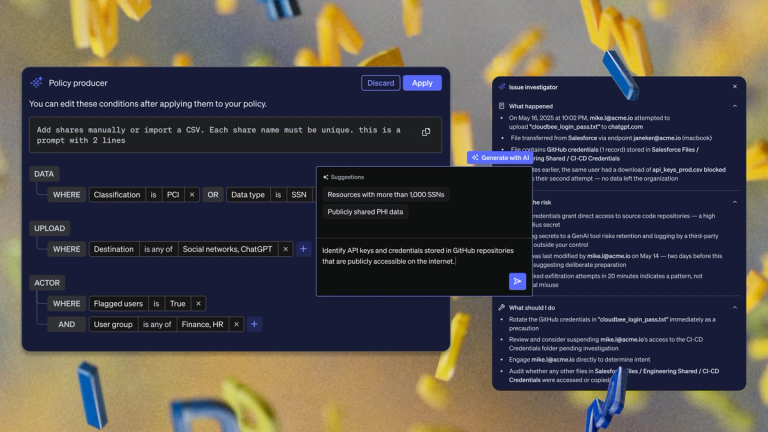
Approval only means something if it can be enforced at the point of use. The research found that 70% of CISOs struggle to enforce policies on GenAI tools, and 65% struggle to define what data is allowed in GenAI at all. A single ban won't fix that. Security teams need to tell the sanctioned enterprise tool apart from personal accounts and other GenAI services, then set rules for each. The approved tool can carry operational data within policy. Unapproved tools and personal accounts should be blocked when sensitive data is involved and coached when it isn't.
Should personal ChatGPT be blocked?
For sensitive data, yes. Blanket blocking tends to backfire, because people route around it and the work moves somewhere nobody can see. Specific blocking is different. It stops a customer list or patient record from going into a personal account. The approved tool stays open for the work it was licensed to do. MIND can tell a personal ChatGPT account from an enterprise one and enforce accordingly. Lower-risk use gets guidance instead of a wall.
What should security leaders do this quarter?
Publish the sanctioned tool list and make the enterprise license the default. Map the other GenAI services people already use, and decide which ones are blocked for sensitive data. Then confirm that prevention covers the browser and the endpoint, not only the vendor's console. The research also found that only 1 in 5 AI projects meets its KPIs, so define success before rollout. The license is the first gate. Measurable outcomes and enforcement are the rest.
Uber has made the right first move. If your organization is rolling out an enterprise AI tool, start with the question the research keeps returning to: what data can it reach? Then ask whether you can enforce a limit on it. Book a demo to see how MIND enforces approved AI use in your environment, within minutes.