






Names and role labels look harmless until someone uses them to decide who to target.
Names and role labels look harmless until someone uses them to decide who to target.
Chainalysis sells software that analyzes blockchain transactions. Crypto exchanges and law enforcement agencies use it to assess risk and identify illicit activity, according to CoinDesk. The company told customers on October 30 that an outside actor used what it called offensive agentic techniques to get into its systems and internal tools, according to The Hacker News. The data touched was limited to customer identity details. Chainalysis says investigation content and login credentials weren't reached. The disclosure is short on technical detail, which leaves the data itself as the clearest thing to learn from.
If you hold customer or partner records, you may have read that and exhaled. The company called what was taken non-sensitive. That reaction is understandable. A second look helps, because attackers don't have to share the label.
What did the Chainalysis attacker actually reach?
Chainalysis said the actor accessed user IDs, full names, email addresses and organization role labels for users provisioned on its platform, as The Hacker News quoted the notice. The notice went to customers and covers information relating to their own organizations and users. The company said authentication credentials and session tokens weren't accessed.
The notice offers no detail on methods or tactics. It says Chainalysis is patching vulnerabilities and hardening its systems. It also says the company is seeing an industry-wide rise in AI-driven attacks.
The Hacker News noted that "offensive agentic techniques" points to an AI-powered tool. It also reported that a China state-backed group called Vapor Panda is using ARTEX, an agentic penetration testing framework, to run attacks at scale.
Why does non-sensitive customer data deserve a second look?
Chainalysis's users tend to work on investigations and compliance. A list of their names and role labels is more than a contact list. It shows who does what at which organization.
That matters more when the attacker is an agent. Email security vendor Abnormal AI said AI mainly improves established attacks by making them faster, more personalized and easier to scale, in comments The Hacker News included. Personalization needs raw material. Names and roles supply it.
None of this means Chainalysis labeled its data wrongly. Many teams rate fields like these as low risk and the call is easy to defend. Fields rarely sit alone, though. A name and email in a newsletter list is routine. The same pair beside a role label inside an internal tool tells a different story.
How can DLP classify data by what it reveals?
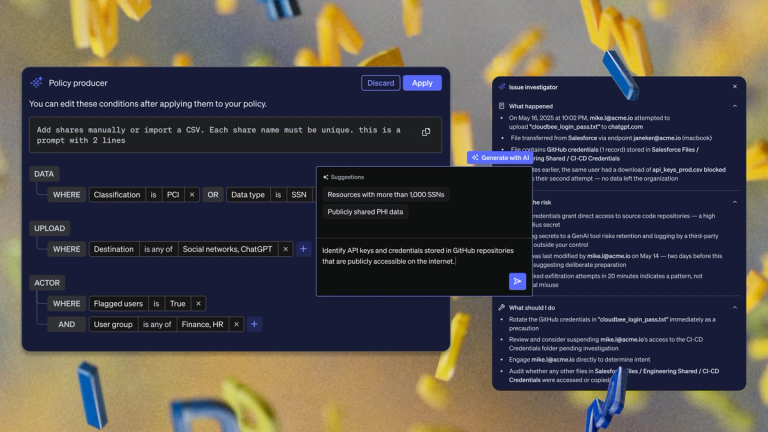
A static label judges a field by its name. Context judges it by what it reveals next to other data and who can reach it. MIND classifies the second way.
MIND discovers data across SaaS apps, endpoints, email and AI tools. It classifies by content and context rather than by pattern alone, then surfaces the risks that matter so your team isn't triaging every field that looks personal. We go deep on content and enrich it with contextual signals, so a name beside a role label gets treated for what it reveals.
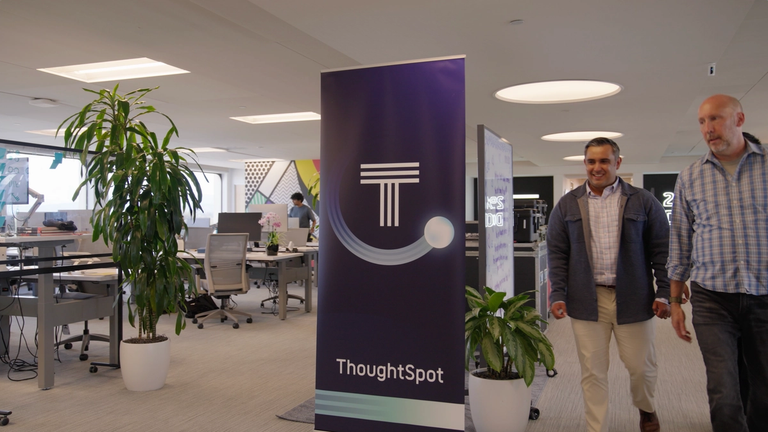
“MIND allows us to see and protect our data across every vector, endpoints and SaaS, from a single place. It's like having a spotlight that shines where visibility didn't exist before.”
Al Faiella
Senior Director of Security Engineering, ThoughtSpot
Where can your team start this week?
Start with an inventory. List the internal tools where customer or partner identity and role data sit together. Ask who and what can reach them, including AI agents acting with human-level permissions. Then check whether your classification treats the combination as sensitive or only the individual fields.
DLP at AI Speed means finding where that data lives before an attacker's agent does. See what MIND finds in your environment and how it classifies it. Book a demo.